Both start as rain and end up icy, but one coats everything in glaze and the other arrives already frozen. The difference is a layer of cold air near the ground.
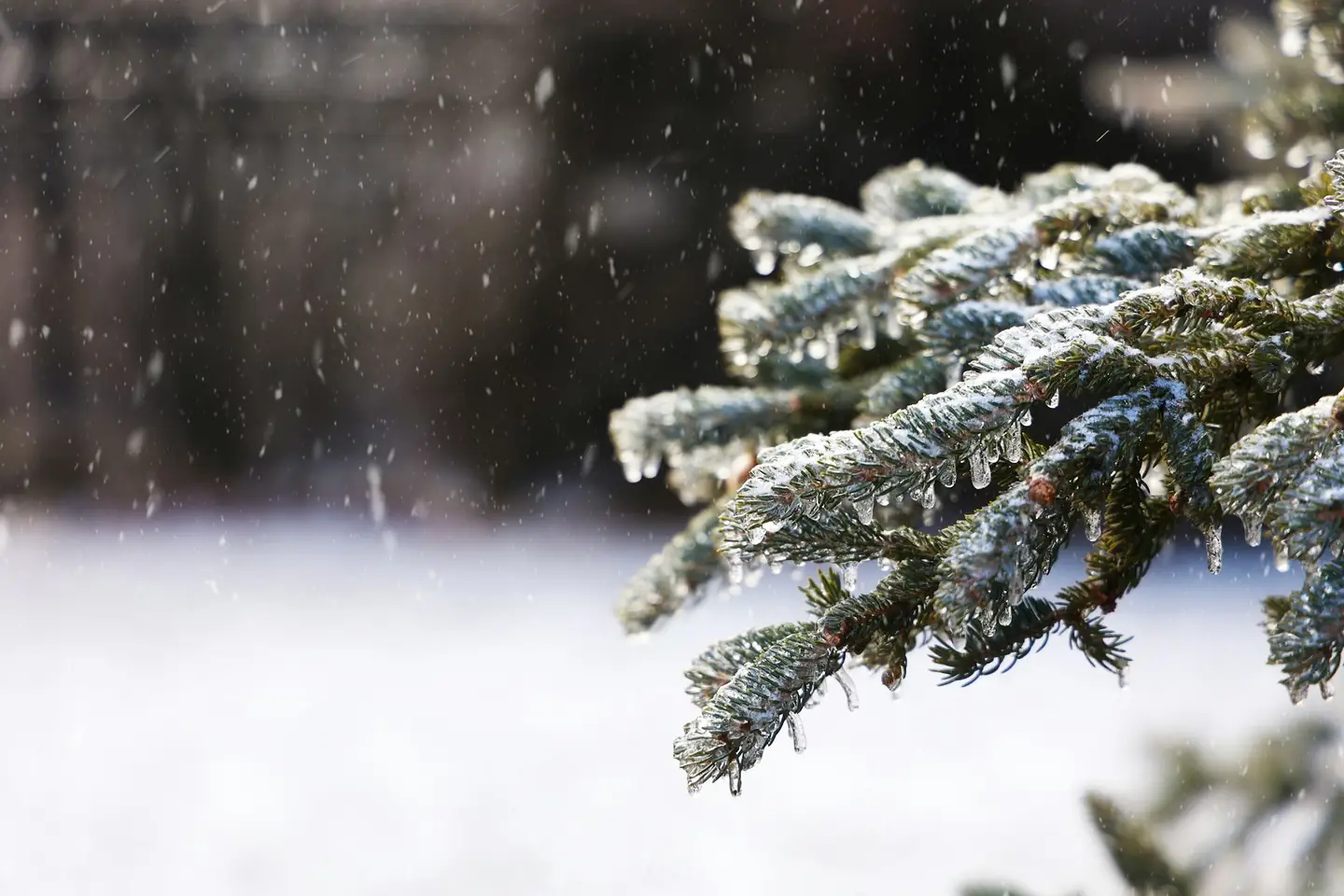
A forecast that says “wintry mix” can hide two quite different hazards. Freezing rain and sleet sound interchangeable and are not. If you remember one thing: one lands as liquid and freezes onto whatever it touches, and the other is already frozen when it arrives.
One process, one variable
According to the National Weather Service in Blacksburg, the two form in the same general way. Rain starts out in a warm layer well above the ground, then falls through a layer of below-freezing air near the surface. What separates them is how thick that cold layer is.
| Freezing rain | Sleet | |
|---|---|---|
| Cold layer near the ground | Thin, so drops don’t have time to freeze on the way down | Thicker |
| What reaches the ground | Liquid water | Frozen raindrops |
| What happens next | The water freezes on contact and glazes whatever it lands on | It arrives as ice already |
The NWS puts it simply: sleet is “simply frozen raindrops.” Freezing rain is the case where the drops reach the ground still liquid and freeze there.
Why freezing rain gets the bigger warning
A glaze on every surface is a different kind of hazard from ice that arrives already frozen. The NWS notes that the weight of ice from freezing rain can build up fast on branches and power lines and make them break, and that outages can follow. Even a thin coating on a road is a skid risk; our guide to black ice covers why.
If the forecast says freezing rain, plan for the possibility of losing power, not just slow travel. Our power outage guide covers what to have ready.
What this means when you read a forecast
- Sleet’s main hazard is usually slippery roads and walkways. That is our judgment, not an NWS statement.
- Freezing rain deserves the stronger reaction, because of the glaze building up on trees and lines.
- Because the type depends on the depth of that cold layer, a storm whose cold layer deepens or thins can switch between types. That is our reasoning from the NWS explanation, not something the source states. For what each alert means, see snow forecast and warnings.
Source: National Weather Service Blacksburg page on freezing rain and sleet.
Photo: Lan Gao on Unsplash.