Cold air crossing warmer lake water builds narrow snow bands that can bury one town while a place a mile or two away sees sun. Here is how it works.
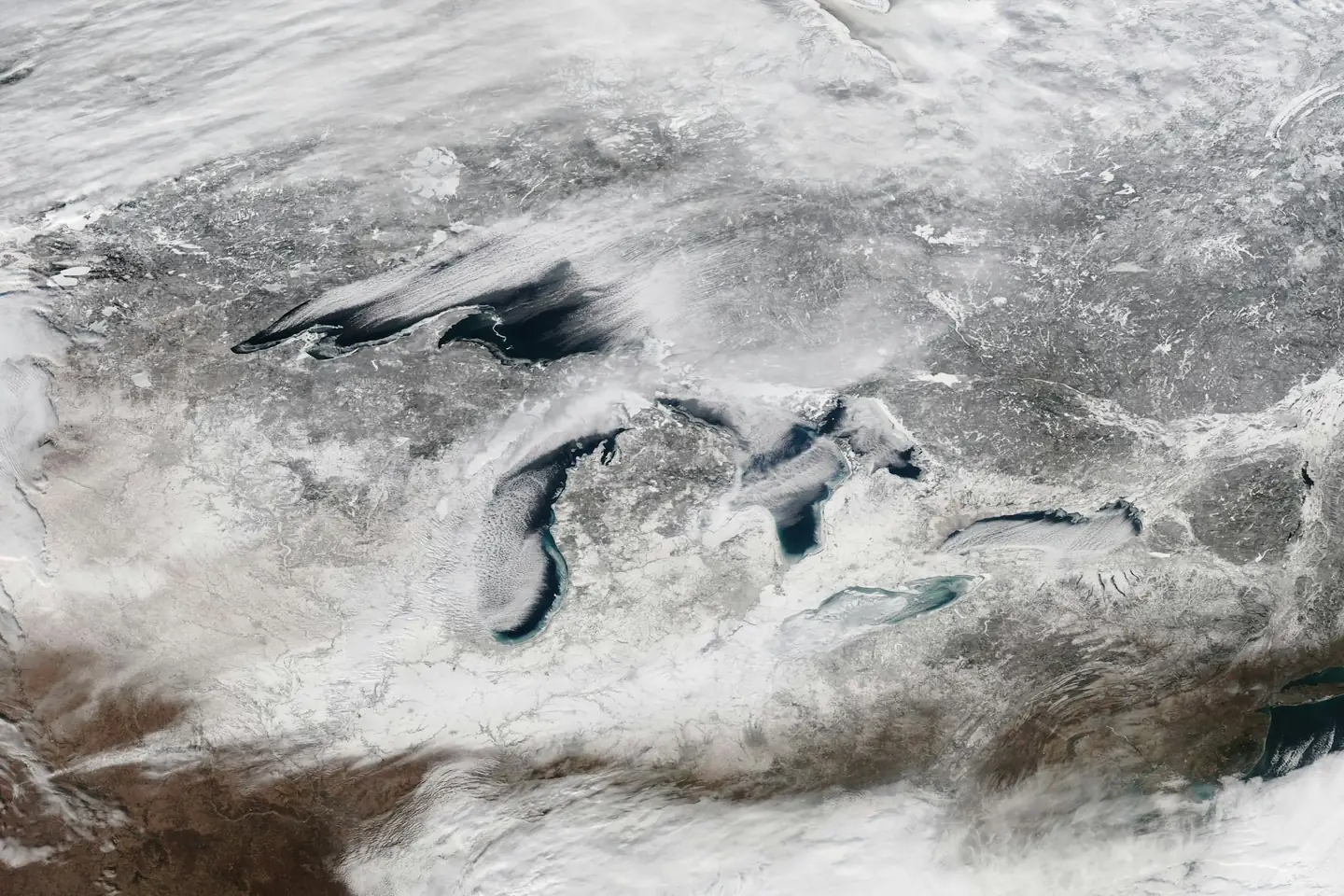
Ask anyone who lives downwind of one of the Great Lakes and you will hear some version of the same story: a driveway buried, and a friend a short drive away under sunshine. The National Weather Service describes exactly that pattern, so it is not an exaggeration.
The recipe
The National Weather Service says lake-effect snow starts when cold air, often from Canada, crosses the open water of the Great Lakes. NOAA’s education pages explain the mechanism: the cold air passes over the warmer lake, picks up water that evaporates from it, and warms slightly. That moisture then falls out as snow downwind.
The key is the contrast. The lake water is unfrozen and warm relative to the air above it. No contrast, no engine.
Why it falls in bands
The NWS says the snow comes in a narrow band that can produce 2 to 3 inches an hour or more. Narrow is the operative word: according to the NWS, heavy snow can be falling in one place while the sun is out a mile or two away in either direction.
Wind direction is key
The NWS names wind direction as a key factor in which areas get lake-effect snow. Our reasoning from that: a band lies along the wind direction, so a shift in the wind can move it from one town to the next. Forecasts for these events can therefore look very different from one town to the next.
How far does it reach?
NOAA says the moisture picked up from a lake normally falls within about 25 miles, though it can sometimes carry as far as 100 miles.
Using this when you plan
- Check the wind direction as well as the temperature. If you are downwind of a lake, that is the part of the forecast that matters most.
- Don’t read a neighboring town’s snowfall as yours. Differences over a mile or two can be real.
- Conditions can change quickly from one place to the next. Our snow forecast and warnings guide explains the alert wording to look for, and black ice is the follow-on risk once the snow stops.
Sources: NWS on lake effect snow; NOAA NESDIS explainer on lake effect snow.
Photo: NASA on Unsplash.